Stinging & Flying Bugs
Get Stinging & Flying Bugs at Their Source, Count on us for Removal in Phoenix, Arizona
Hornets
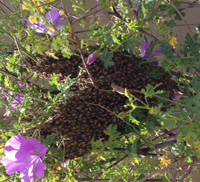
 Hornets are similar to yellow jackets. The number of hornet species is far less than that of bees, only around 20 species. Hornets are known for their painful stings, but are very important in the control of other insects that could become pest problems.
The social aspect of these bugs makes them very aggressive in the defense of their nest, which is composed of a paper substance derived from saliva and pulp. They can be found within treetops, roof overhangs, or other covered areas. Contact us for any wasp nest removal in Arizona.
Appearance and Life Cycle
Hornets are usually yellow and brown in color. They measure in length about 1.5 inches long.
Hornets lay roughly 50 eggs, which take 5–8 days to hatch. In the next two weeks the larvae undergoes its five stages to become an adult.
Treatment
Call Evergreen Pest & Termite before attempting to treat hornets or wasp nest removal in Arizona. We can have a trained professional ensure you and your family is safe while we rid you of this problem.
Wasps
Wasps usually have two pair of wings with a distinct pinched waist. Their colors range from black to blues to greens and vary in size. Social and solitary insects, wasps in colonies will rely heavily on the female to perform needed duties within the nest.
Interesting information about solitary wasps is when they lay their eggs they will leave them alone to hatch. Like bees and hornets, wasps will sting when threatened. However, unlike some bees, these insects can sting multiple times. Protect your family from getting stung with wasp nest removal in Arizona.
Appearance and Life Cycle
Later in the summer, some species of wasp queens will produce unfertilized eggs, which hatch as males. These wasps will then fertilize the soon-to-be queens for the following year, which will hibernate to protect themselves. Next spring, the queen will begin to lay eggs, which will become the female workers.
Like hornets, wasps support humans. These insects can be used as parasites or predators to help control other possible bug infestations. However, like bees and hornets, wasps can be dangerous to your home and family and may need to be removed.
Treatment
Treatment for flying insects can vary on the type of pest that we are dealing with. Call Evergreen Pest & Termite today for wasp nest removal in Arizona and get started treating these pests.
Yellow Jackets
The name of this insect is due to their yellow and black bodies. They are often mistaken as bees, expect for the lack of hair.
Not only do yellow jackets pollinate, but they also scavenge for meat, fish, and substances that contain sugar, which makes them a very common nuisance. These bugs are commonly ground nesters.
All workers are sterile females. Males appear later in the summer. Once these males hatch, they will mate with the females who will become the following year’s queens. When winter comes, or colder temperatures appear, the female workers and males will die.
Aggressive defenders of their colonies, yellow jackets are not quick with the stinger. Like most wasps, these bugs can sting multiply times. Avoid getting stung by a yellow jacket; call us for yellow jacket removal and wasp nest removal in Arizona.
Appearance and Life Cycle
Yellow jackets can measure 10 to 16 mm in length. They are different from bees because of their thinner and more defined waists, and their wings are as long as their bodies.
A queen will begin to build a paper nest, where she will lay the first batch of eggs. Once hatched, the queen will feed them until they are ready to pupate and mature. A colony can contain more than 1,000 wasps.
Treatment
Treatment for flying insects can vary on the type of pest that we are dealing with. Call Evergreen Pest & Termite today for wasp nest removal in Arizona and get started with treatment for these pests.
Mud Daubers
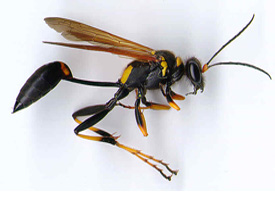
Another type of wasp, the mud dauber likes to form mud-like tubes. These tubes are normally found up high and around doors and overhangs. Females create the tubes with their mandibles, by forming the mud-like substance for the nest. Some types of mud daubers feed on spiders, including black and brown widow spiders.
Appearance and Life Cycle
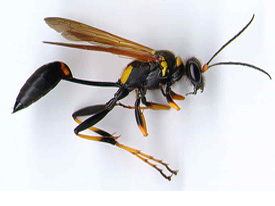
Mud daubers are long, slender wasps about one inch in length. They are black and yellow in color.
Females lay about only 15 eggs in their lifetimes.
Treatment
Treatment for flying insects can vary on the type of pest that we are dealing with. Call Evergreen Pest & Termite today and for wasp nest removal in Arizona and get started on treatment for these pests.
Are you experiencing bee issues? Contact us at 623-566-1455 for a bee removal company referral.